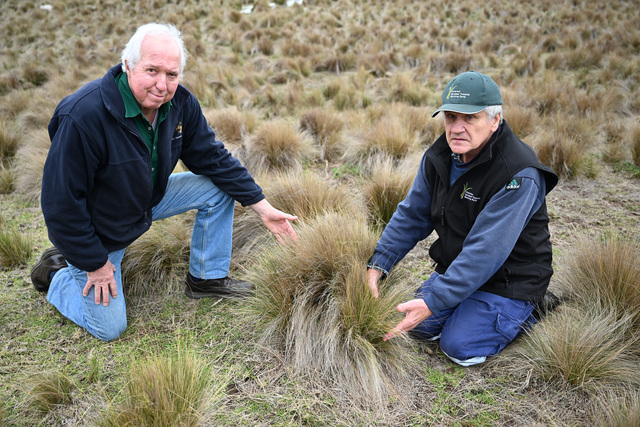
A working group tackling the invasive serrated tussock is calling on property owners in Wyndham and the state government to take the weed seriously.
Ivan Carter of the Victorian Serrated Tussock Working Party (VSTWP) said sections of Werribee, Wyndham Vale and Little River are naturally susceptible to infestation.
“It likes dry conditions and prefers more marginal countries– that’s why it does very well around Werribee,” Mr Carter said.
One of the most difficult things about attacking the issue is distinguishing serrated tussock from other weeds.
“That is what we find the most common in areas that aren’t primary production areas like farms, people just don’t know what it is and how to identify it,” Mr Carter said.
“The good news is once you have identified it, it is not a complicated plant to get rid of.
“They have a very shallow system, and you can dispose of them usually in a double garbage bag which is considered best practice.”
In infestations of more than 50 weeds, he said there are registered herbicides that can be obtained and sprayed; the best time to begin is spring.
There are also larger boom sprays that can be used to cover bigger patches of land.
Under the catchment and land protection act, the state government has the authority to enforce property owners to remove the weed.
Mr Carter said that many land owners he had spoken to have never been urged to do a clean up.
“That is probably the crux of it– people have spoken to me about saying that ‘we used to get visited more and it used to get everyone on board to do it at the same time.’”
An Agriculture Victoria spokesperson said that the state government is investing more than $5.5 million into supporting community-led action to tackle the issue through the Partnership Against Pests program.
“We take a risk-based approach to managing serrated tussock—prioritising isolated infestations that pose the highest risk in Victoria and supporting communities to contain its spread,” the spokesperson said.
Star Weekly understands that Agriculture Victoria looks to support areas that have sustained community-led action as compliance alone rarely leads to long term change.