
February 1-7 was Feeding Tube Awareness Week, which aims to increase the understanding of tube feeding. Jena Carr spoke with two women with feeding tube experience – one who lives with a permanent surgical tube and another who is the mother of a toddler who needs a feeding tube.
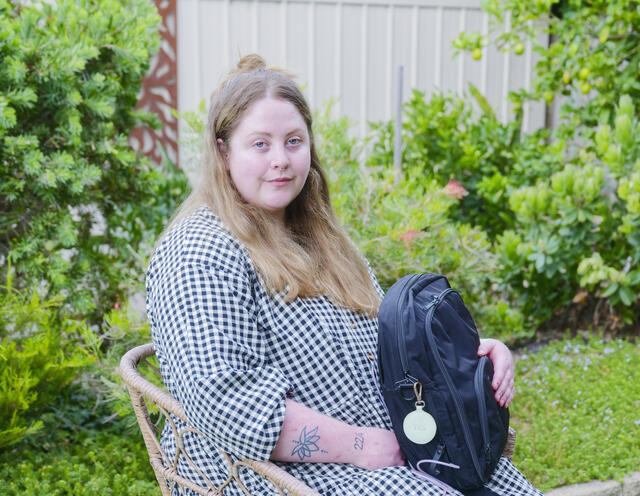
Tess Swift, 31, was diagnosed with gastroparesis, which means her stomach is partially paralysed and can’t digest food properly, after a trip to Thailand more than 10 years ago.
“The gastroparesis was caused by a really rare parasite, and it has done a lot of damage to other parts of my body as well,” Tess explained.
“I first got sick in 2015 after a family holiday to Thailand and battled with hospitals and doctors for the first two and a bit years before I was diagnosed with gastroparesis.
“I got my first feeding tube in 2018. I thought it would just be short-term, and here I am eight years later, so it was a pretty big adjustment in the early days.”
Tess now has a permanent surgical tube that goes into her small intestine so that her stomach doesn’t have to try so hard to digest food.
“I’ve got some pretty gnarly scars now, but I guess the biggest thing for me was just reminding myself that without having it, I wouldn’t be alive,” she said.
“I enjoyed not having it visible on my face, but I had to go through a large open abdominal surgery for that, and I was only 23 at the time, so it was a big change to my body.
“Unfortunately, my health is still in a pretty terrible position as, on one hand, having a feeding tube is great because it has helped keep me alive this long.
“In terms of tube feeding, it’s very up and down as it is kind of hard to live with a medical device that you need to survive, but can also cause a lot of problems at the same time.”
Tube feeding, also known as enteral nutrition, provides essential nourishment for people who are unable to eat or drink orally, or who require additional nutritional support.
Tess said it was important to help educate the wider population about feeding tubes, and there were a lot of different reasons why someone may need a feeding tube.
“There’s probably a lot more people in the world who have feeding tubes than people realise,” she said.
“I have no issue if people out in the real world or on social media want to ask questions because humans are curious by nature.
“I would so much rather have a conversation about my feeding tube and why I have it and what it’s for than deal with people speculating or judging.
“My advice for people who have either recently started or are starting on a feeding tube journey is not to be embarrassed about it, as everybody needs to eat and drink; it just looks different for some people.”
People of all ages may use feeding tubes, including babies, children, teenagers, and adults, with nutrition delivered directly into the stomach or small intestine through a feeding tube.
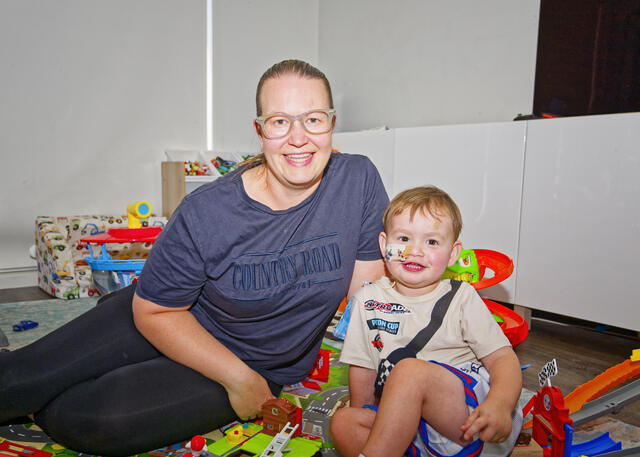
Two-and-a-half-year-old Alfie was born premature and developed an undiagnosed genetic disorder that mimics cerebral palsy and requires him to live with a feeding tube.
Mum Jessica Willder said Alfie has had a feeding tube for about 12 months as he had trouble eating and drinking.
“What he doesn’t drink orally goes down his tube, which some days could be all of it and other days could be half or a quarter of it,” she said.
“His feeding tube goes down the nose and the back of his throat into his stomach, which has to be replaced every two to three months.
“Then with all the tape on his face, we have to change it whenever it starts to come off, which could be every couple of days or once a week if we’re lucky.
“It’s rather traumatic as we have to wrap him up so that he can’t get his hands on the feeding tubes and pull them out while we’re changing all his tape.
“It takes me, my husband, and then my two daughters to help hold him still and get all the tape off and put more tape back on to keep the tube in place.”
Jessica said it was important for people in similar situations to know that they were not alone and encouraged people to reach out to others.
“It shouldn’t be a taboo subject…and it shouldn’t be something that people stare at or make assumptions about,” she said.
“You take each day as it comes, and each day will be slightly different, but it can help to link in with other parents who have that experience.
“The number of times that I have been asked what sort of cancer my child has has been a lot, but he doesn’t have cancer.
“Most people think feeding tubes are for people that have cancer…and there are so many other reasons why people need feeding tubes.”
Many locations across Australia and New Zealand lit up blue and purple for Feeding Tube Awareness Week (1-7 February), which is held by charity ausEE.
Chief executive Sarah Gray said the annual week aimed to increase the understanding of tube feeding, share reliable information and resources, and foster connection and support within the community.
“Purple is a common colour of feeding tube supplies, while blue represents what flows through the tube; whether that’s formula, blended foods, breastmilk, or water,” she said.
Visit feedingtubeaware.com.au for more information and support networks.