First responders from across the state cut their teeth in a vital training exercise in Werribee recently.
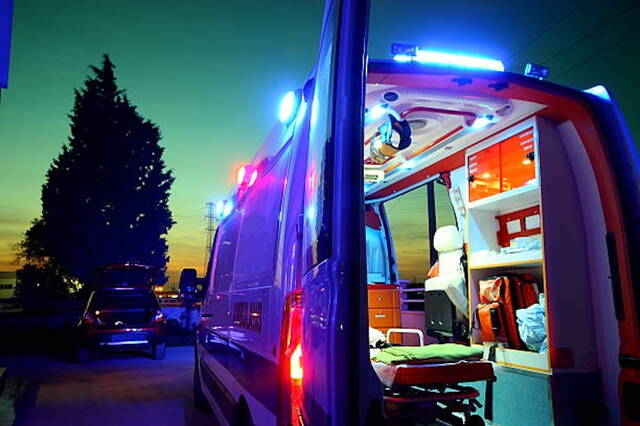
On Monday, July 28, Ambulance Victoria (AV) paramedics teamed up with other emergency services in a high intensity road crash simulation.
The multi-agency training in Werribee, now in its eighth year, brought together representatives from AV, Country Fire Authority (CFA) and Victoria Police, with participants responding to two scenarios mimicking real-life motor vehicle crashes.
The training scenarios saw emergency services respond to two-vehicle collisions that left patients mechanically trapped with critical, life-threatening injuries.
CFA members lifted the roof of a car which had been cut off, then the paramedics attended to a mannequin.
Blixa Webster of AV said the exercise is always an excellent opportunity for first responders to sharpen their abilities in a controlled environment.
“This annual training event gives paramedics and our emergency services colleagues the chance to practise critical skills in a setting that is as close to the real thing as possible,” Ms Webster said.
“These high-fidelity exercises took place in real time, in the dark, with real equipment to simulate realism in every aspect.”
“These patients often need surgical intervention to ensure long-term survival, so it’s extremely important we run through these scenarios to ensure we all know our roles.”
“Even in a simulation, road crash rescue incidents are confronting and stressful.”
She said the cooperation element was vital.
“These exercises allow paramedics to practise working as a team with other emergency services and, at the same time, receive feedback on what they’re doing.”
“Managing the complex elements of entrapment and patient criticality required collaboration between paramedics and firefighters to access and treat patients before they could be extricated and transported to hospital.”
In addition to the practical scenarios, the evening also included a presentation on AV’s response to road crash rescue and workshop stations for low frequency skills.
“Taking part in opportunities such as these are a great way to ensure we continue to provide best care to patients at real road incidents when it matters most,” Ms Webster said.
A facilitator was also assigned to each mock patient – an AV mannequin – to help participants understand their findings and the impact of their decisions and care.