Australia’s first government-owned domestic airline, Trans-Australia Airlines (TAA), which later rebranded to Australian Airlines, made significant contributions to the aviation industry since its inception in 1946. The TAA museum is the sole aviation museum dedicated to preserving historic domestic aviation development in the country. Sam Porter spoke to museum president John Wren about the airline and his time working for TAA.
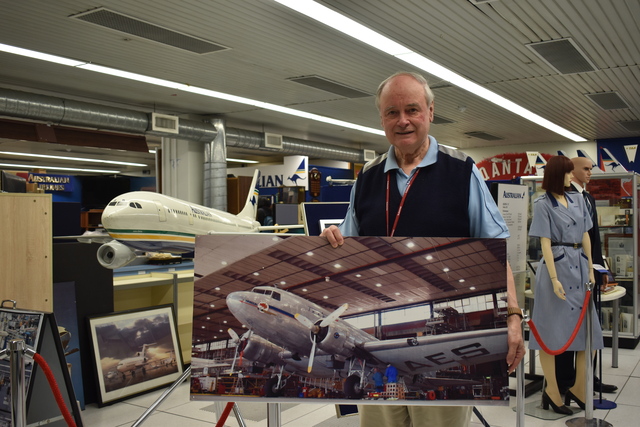
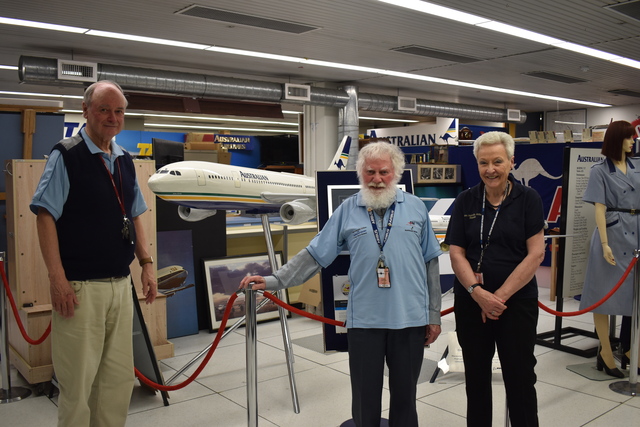
Tucked away in a street eight kilometres from Melbourne airport stands an unassuming museum. Models of planes, vintage airline memorabilia, artwork, mechanical aircraft components and other inventions are displayed in what used to be the TAA/Australian Airlines computer centre.
Museum president John Wren oversees the museum’s operations. He’s a knowledgeable and passionate spokesperson for the old airline, having worked there for 33 years from 1965.
“I was selling all of the aircraft and doing the contracts, and then getting the aircraft modified in our workshops, taking the aircraft to America and doing the deal over there, getting the check — the good part — and coming back and doing the next one,” John said.
Through his role selling aircraft, John was involved in many areas of the company and had a “good exposure” to TAA. He started in engineering and was eventually seconded to flight operations. He planned ferry flights — the transportation of aircraft without passengers or cargo — and worked with Japanese pilots to create contracts and run flight ops simulator training for them as well as working in finances and catering too.
John offered a tour of the museum, which is laid out in chronological order of the airline’s history.
TAA was established by the federal government in 1946 after it recognised a need to form a national domestic airline network post WWII. It was at this time that John’s father began working for TAA as an engine shop inspector.
“My father, he was here on day one in September ‘46 when the first flight went, and he did 33 years,” John said.
John’s brother also worked for the airline for 43 years.
“He was in sheet metal, and he was making or repairing bits of the aircraft. Anything that had aluminium on it,” John said.
Displayed in the first section of the museum is a large, framed poster of the illustrated Nola Rose, the design slightly surrealist. Nola Rose, a model who was discovered at Bondi Beach, became the face of TAA in the 1950s and for decades to follow. At the bottom of the poster reads the airline’s famous slogan, ‘Fly TAA the friendly way’.
The Royal tour in 1954 marked a historical moment for TAA as the first airline in the country to fly ruling British royalty. Queen Elizabeth II and Prince Phillip took six TAA flights as part of the tour. A signed photograph of the royal family is displayed next to a letter sent on behalf of the Queen.
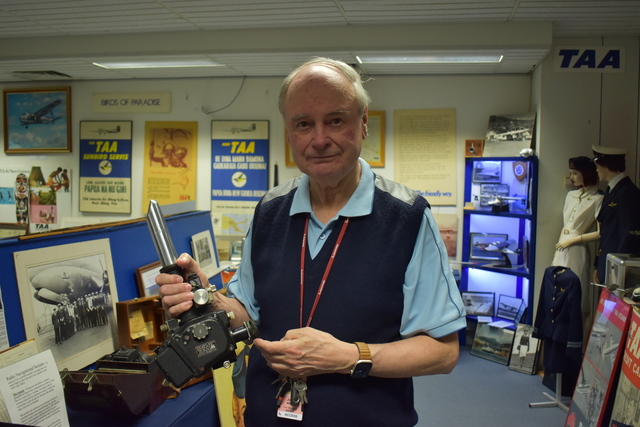
Further into the exhibition, John pulled out what he said is one of the most fascinating items in the room. It’s a radio navigational sextant, also known as a periscope sextant, used to navigate flights over water in the 1950s and 1960s.
The device, fitted with an eyepiece, extended up through the roof of the aircraft, and allowed planes to be navigated by the stars.
“Captain Cook, he used a less modern version [of the periscope sextant] but it was the same principle,” John said.
Another nifty invention John highlighted was the black box, invented in Melbourne in the 1950s.
TAA marked many firsts for the aviation industry across Australia and the world, however not all of them are bragworthy.
John pointed out an old newspaper clipping. The headline read ‘Bomb threat to airliner.’
During the last Brisbane to Sydney flight on July 19, 1960, a hijacker armed with a bomb and a rifle fired a shot into the aircraft ceiling after the first officer tried to calm him. Forty-three passengers and six crew members were on board and it would become the first skyjacking in Australia. The captain aided the officer with the intervention and successfully restrained the hijacker.
John seemed keen to move on with the tour.
“Not proud of it but these things happen,” he said.
Around the corner stands a row of mannequins dressed in brightly-coloured air hostess uniforms, fitted with mini skirts and blazers. The arrival of a new decade.
Museum volunteer Elizabeth Watkins, more frequently known as Libby, worked as an air hostess for TAA and QANTAS from 1968 to 1971.
“I had to leave because I got married, which was the rule at the time. You had to leave when you got married or retire at 35,” Libby said.
“We were very happy and choofed along in those days. One day you might have the prime minister on and the next day you’ve got some drunk in the back seat.”
Libby served Sir John Gorton, Sir William McMahon and Gough Whitlam during her time as an air hostess — a period when the prime minister travelled via domestic airline carriers.
“You always had to be on your best behaviour. Everyone got good service but they had to get extra special service.”
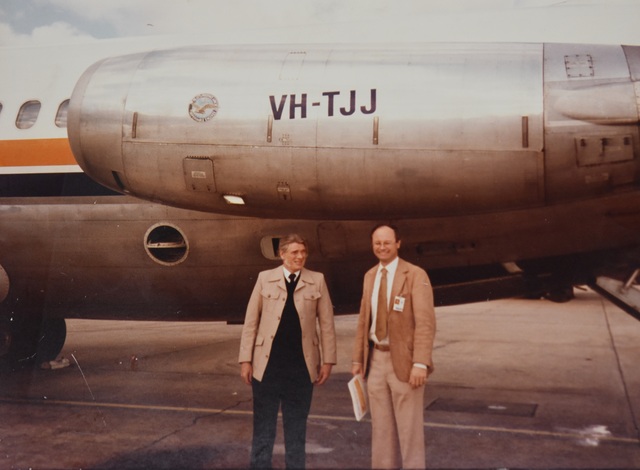
The airline’s acquisition of the Airbus A300 in 1981 brought about significant change.
John said the capacity jumped from 130 people on TAA’s previously largest aircraft to over 300 on the Airbus.
“We all got pagers to have ready if anything went wrong, to keep it going, because being a new aircraft type we wanted to give a good impression,” John said.
“The thing went for a whole year with absolutely nothing going wrong with it. It was a marvelous aircraft…and then a guy from catering [driving a forklift] ran the forks into the door sill at the back and he ruined it so we had to manufacture another one,” John said.
Five years after the Airbus acquisition, in 1986, TAA became Australian Airlines, which was subsequently purchased by QANTAS in 1992 and merged with the private company the following year.
John described the people he worked with at TAA “like a big family.”
“I got up in the morning and always was happy to come to work…and the people were ultra friendly,” he said.
The museum was started by members of the TAA/Australian Airlines 25 Year Club who will gather next year to celebrate TAA’s 80th anniversary.
“That’ll be a really big celebration from interstate and overseas too,” John said.
“We’re keen to have people come and see the history that we’re trying to keep here and explain to people if they’ve got questions.”
The TAA/Australian Airlines museum is located at 7 York Street, Airport West and is open on Tuesdays, Wednesdays and Thursdays between 10am – 2pm. Admission is by a suggested donation of $5.