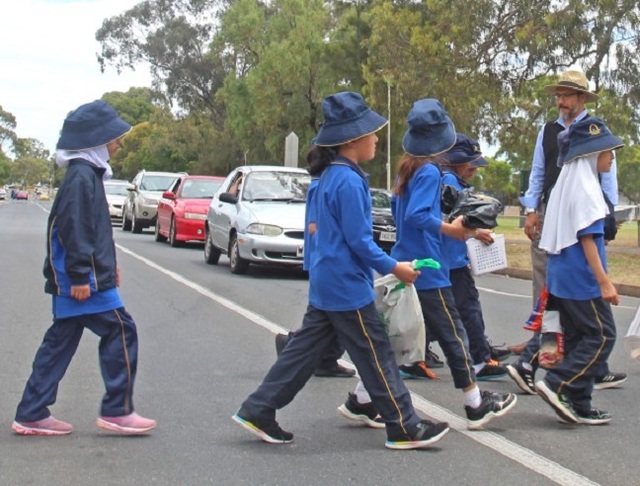
RACV is reminding all road users to use extra caution around school zones as students return to classrooms across the state.
RACV head of policy James Williams said motorists need to be careful when driving and parking around schools.
“When we obey speed limits and exercise patience and caution, we are role-modelling road safety behaviours,” he said.
According to the Transport Accident Commission (TAC), approximately seven children aged zero to 15 die each year on Victorian roads.
Children are particularly vulnerable around roads due to their reduced visibility, limited ability to judge speed and distance, and tendency to act impulsively.
RACV is highlighting school speed zones, children’s crossings and parking and drop off areas as areas to prioritise safety.
Most Victorian schools have designated speed zones, reducing limits to 40km/h where regular limits are below 80km/h, and to 60km/h where regular limits are 80km/h or higher.
Time-based school zones typically operate between 8am to 9.30am and 2.30pm to 4pm on weekdays during school terms.
Research shows that pedestrians hit by a vehicle travelling at 40km/h have significantly higher survival rates than those hit at 50 or 60km/h.
Motorists face fines and demerit points for failing to comply with posted limits.
Childrens crossings are recognisable by the bright orange ‘Children Crossing’ flags, and all vehicles must stop for pedestrians waiting to cross when flags are displayed.
Drivers must stop until the crossing is completely clear, with crossing supervisors potentially present at the scene.
Parents should familarise themselves with school-specific parking arrangements, including ‘Kiss and Go’ zones for quick drop offs.
Parents should remember parking is prohibited within 20 metres before and 10 metres after school crossings, and double parking, stopping in bus zones and in ‘no stopping’ areas is illegal.
RACV notes a concerning decline in active transportation to schools. According to Victoria Walks, only about 15 per cent of Australian students regularly walk or ride to school today, compared to 45 per cent in 1974.
For families choosing active transportation, RACV recommends; supervising primary-aged children until around age 12; holding hands with children under five near any roadway; teaching children to remain alert and avoid distractions; meeting children on the school side of the road during pick-up; ensuring all cyclists wear helmets (children under 12 and accompanying adults may ride on footpaths); and ensuring children under the age of 16 do not ride on e-scooters outside of private property.
“School zones exist for the safety of our youngest and most vulnerable road users,” Mr Williams said.
“Everyone shares responsibility for creating a safe environment around schools, whether you’re a parent, teacher, or simply a passing motorist.”
“Congestion at school drop off is a point of frustration for many parents and carers. It is worth considering parking a block away and walking the last part of the journey to the school. It’s a great way to avoid congestion while increasing active travel.”